“Knowing yourself is the beginning of all wisdom.” – Aristotle
Studies show that the average person is exposed to the equivalent of 74 gigabytes of information each day. Another 2015 study declares our attention spans have dropped to just 8 seconds — shorter than that of a goldfish (and probably worse since the age of TikTok brain rot) — proof we live in a time of chronic distraction. This constant input fractures our focus, disrupts our ability to think deeply, and narrows the window for meaningful innovation.
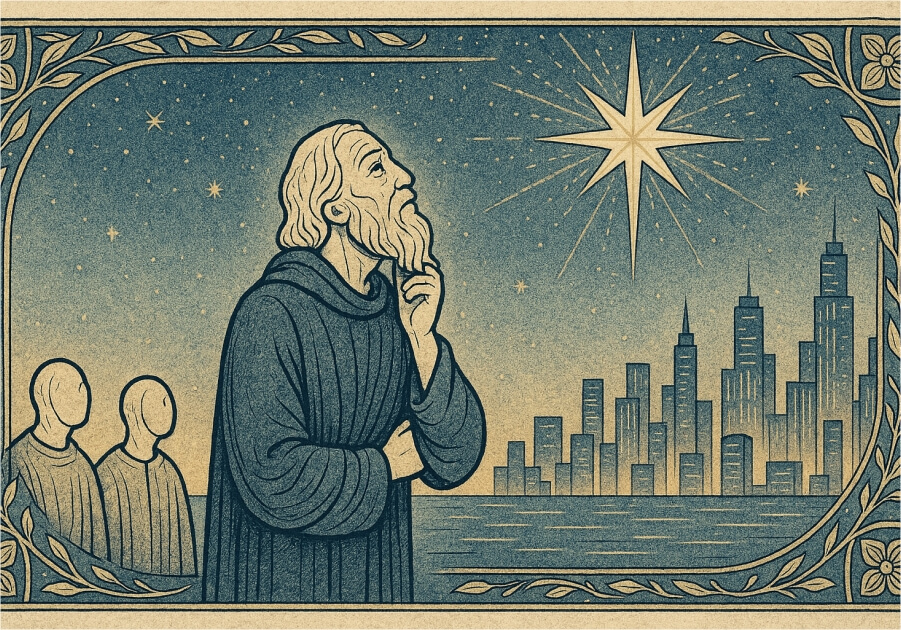
It’s no wonder that in this noisy world, we look to the Sage archetype for clarity, especially for our innovative and creative breakthroughs. Sages listen, observe, and understand before they act. Grounded in information and intelligence, they see patterns others miss and bring meaning to complexity and are an essential addition for any team or business.

What is the Sage Archetype?
The Sage is a thinker, strategist, and guide. They thrive in complexity, bringing logic, context, and reflection to the creative process. While others react, the Sage reasons. They innovate not by disrupting systems, but by understanding them.
Sages excel in unpacking complicated ideas and guiding others with insight. But their strength can become a limitation when they hesitate to act. Too much thinking can lead to stagnation. To fully realize their potential, Sages must pair deep thought with timely action.
The Sage Archetype in Psychology and Mythology
Swiss psychologist Carl Jung described archetypes as universal characters within the collective unconscious. For Jungian archetypes in business, the Sage represents the pursuit of truth and the hunger for understanding, often paired with the Magician archetype, who transforms knowledge into action.
Throughout history, we see Sages in figures like Athena, the Greek goddess of wisdom; Thoth, the Egyptian god of knowledge; and Odin, the Norse seeker of cosmic truth. These characters don’t just possess knowledge—they use it to shape worlds.
Today’s sages operate in boardrooms, classrooms, and studios, guiding others with certainty and a long view of progress, using their adept creative strategy psychology.
Core Motivations and Fears
Sages are driven by a desire to understand the deeper workings of the world and to use that knowledge to make an impact. They are motivated by clarity and mastery, and they thrive when solving complex problems.
What’s their greatest fear? Acting without enough information or making a decision that leads others astray. Ironically, this fear can hold them back from doing the very thing they’re best equipped to do: lead with wisdom.
When they learn to trust intuition as much as intellect, Sages become powerful forces for transformation.

Key Traits and Dimensions of the Sage
Through my experience working with creative minds, I’ve developed a structured framework inspired by the Wheel of Life to assess the key dimensions of the Sage archetype. These help map both strengths and challenges.
| Dimension | Description |
| Vision / Purpose | Strategic thinkers with a focus on long-term impact. |
| Influence | Leads through thoughtful insight and grounded authority. |
| Emotional Core | Seeks meaning, relevance, and thoughtful contribution. |
| Action Style | Reflective, prefers data-backed, well-planned steps. |
| Connection | Gains trust through credibility rather than emotion. |
| Creativity / Innovation | Analytical, prefers tested methods over experimentation. |
| Transformation | Evolves systems with strategic care, hesitant with rapid change. |
Sages flourish in roles where wisdom is valued and clarity is needed—but they must balance reflection with responsiveness to stay relevant.
Strengths of the Sage
At their best, Sages:
- See patterns others miss and connect disparate ideas.
- Offer calm, strategic insight during chaos or uncertainty.
- Elevate creative work with depth and foresight.
- Guide others to think critically and act meaningfully.
They are often the ones who ensure that innovation is not just exciting, but sustainable and rooted in purpose.
Shadow Side of the Sage
Even the most enlightened archetypes have their shadows. For Sages, this can look like:
- Analysis paralysis: waiting too long to act.
- Relying on what’s proven, avoiding untested ideas.
- Intellectual superiority that shuts down collaboration.
- Using knowledge to control rather than inspire.
To grow, Sages must remember that wisdom includes knowing when to take the leap—not just when to hold back.
Sage Archetypes in Action
Sages creatives don’t chase the spotlight, but their influence shapes the direction of teams, movements, and ideas. They are unsung heroes.
- Rick Rubin – A legendary music producer known for his deep listening, Rubin brings out the core essence of artists by removing noise and reconnecting them with creative authenticity.
- Don Norman – Widely considered the father of user experience (UX) design, Don Norman has transformed how we think about design by grounding it in human-centered logic.
- Leonardo da Vinci – One of the most iconic Sages, da Vinci’s endless thirst for knowledge led him to master disciplines from anatomy to engineering to art with notebooks full of blueprints of ideas far ahead of his time.
- George Lucas – As the creator of Star Wars, Lucas draws heavily from mythology, philosophy, and archetypal storytelling. His Sage energy is not only in what he created, but in how he used narrative to prompt deeper reflection, spark imagination, and guide others toward self-discovery.
Do You See the Sage in Yourself?
The Sage archetype is calm, strategic, and deeply necessary in our distracted world. But insight alone won’t move the world—courage will.
When the Sage learns to act on their wisdom without waiting for the perfect moment, they become unstoppable catalysts for innovation and meaning.
Curious to know your archetype? Discover your Creative Genius Type in minutes using the quiz.

Discover Your Innovator Persona
Uncover your unique creative style and learn how to leverage it for innovative thinking and leadership.
About the author

Founder & Facilitator